
Most YouTube creators get tripped up by the same thing: the most viewed videos on a channel often aren’t the best videos for the business. This guide shows how to decide which videos to make by focusing on what drives leads, sales, and affiliate clicks.
Below is an AI-assisted summary of the key points and ideas covered in the video. For more detail, make sure to check out the full video above!
Views don’t equal value (and YouTube won’t tell the full story)
YouTube Analytics does a great job showing what gets views:
- Impressions
- Watch time
- Subscribers gained
- View counts
A business channel needs the “flow on” data too:
- Which videos drive traffic into the business
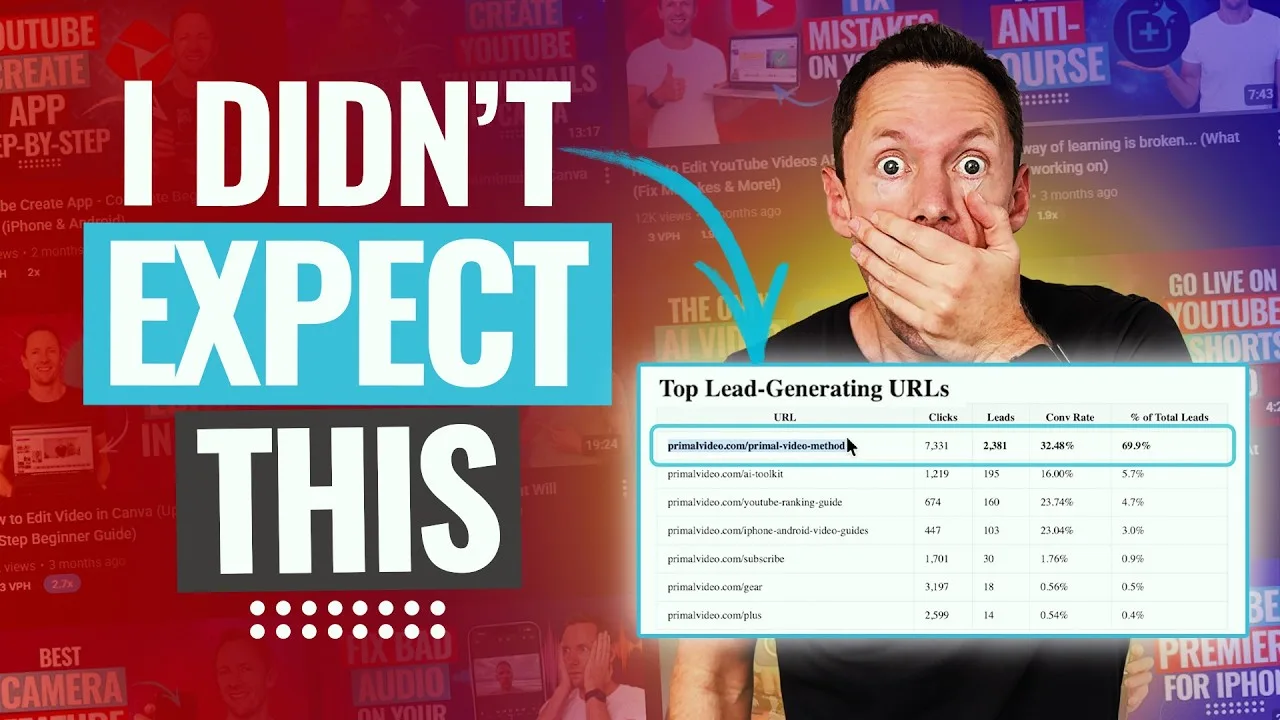
- Which videos generate leads like email list signups
- Which videos produce affiliate link clicks and sales
- Which topics deserve a remake, update, or sequel based on business results, not vanity metrics
When deeper tracking gets added, the results can be wild. In a 90-day snapshot, the top 15 videos by YouTube views and the top 15 videos by business value can be completely different lists.
Here’s the kicker: the top 15 videos YouTube “rewards” can get twice the views while generating 42% fewer leads. That’s a lot of effort for a lot less business impact.
Track what matters: leads and affiliate clicks (not just watch time)
If a channel exists to grow a lifestyle business rather than just rack up views, tracking needs to move beyond YouTube’s default reporting.
Key metrics to track alongside YouTube performance:
- Email list signups (leads)
- Affiliate link clicks (often the biggest revenue driver)
- Which specific videos drive those actions
- Which topics consistently attract viewers who take action
Link tracking across the entire channel changes everything. Once the data exists, focus can shift to systems and processes: stop guessing, start prioritising what’s proven to move the needle.
The 5-part filter for choosing the right YouTube video topics
Instead of picking topics based on views alone, look for overlap, like a Venn diagram. Any one point can spark an idea, but the best topics usually hit multiple points at once.
1) Start with what’s genuinely exciting and valuable to the audience
If the topic doesn’t spark interest, it’s easier to procrastinate and the content often feels flat. Excitement is a productivity hack and a retention boost.
Ask:
- What’s exciting right now that the audience would also want to geek out on?
- What does the channel want to be known for?
- What topics and conversations fit the direction of the brand?
When creator energy is high, viewers feel it. That alone can be a clear advantage.
2) Look for existing winners to update or remake
Updating content can be serious low-hanging fruit. Many creators skip this early on because it feels “done already,” but updates often outperform brand-new topics.
Why updates work:
- Viewers want the latest info; a “right now” video beats a two-year-old one when things have changed
- Proven topics remove the guessing game
- Annual roundups build momentum, for example “best editing software every year”
Instead of judging winners by view count alone, judge them by business impact: leads and affiliate clicks.
3) Use performance data to generate related topic ideas
Once the top lead-generating videos are known, use them to brainstorm the next logical videos that the same viewer would also want.
Examples of related ideas driven by lead data:
- An iMovie complete tutorial when the existing version is outdated
- Updated Adobe Premiere Pro tutorials
- DaVinci Resolve dedicated tutorials
- CapCut content with iPad-specific editing content highlighted as converting especially well
- Beginner-friendly skills like color grading and audio editing
Those ideas aren’t based on vibes. They’re based on what’s already working with the channel goals.
4) Run every idea through the viewer’s lens (pain or problem first)
This needs to be considered from idea to publishing.
Questions to pressure-test a topic:
- What pains and problems are viewers actively trying to solve?
- What are they searching for on YouTube and Google?
- If this showed up in their feed, would they click?
A simple way to validate demand:
- Check other channels’ top-performing videos, especially recent ones
- Use that as evidence there’s demand
- Create a unique version with a different angle, perspective, or framing
This turns competition research into a win-win: viewers get what they want, the channel stays aligned, and the business gets traction.
5) Validate with search volumes and real search data
Search-driven content can be a powerful growth lever, especially when the goal isn’t competing with trending entertainment channels.
Focus on:
- What people actually type into YouTube and Google
- The exact wording they use to describe their problem
- Search volume data from keyword and SEO tools
This lets creators:
- Build videos around proven demand, for example “best video editing software for Mac in 2026”
- Niche down and add a unique spin
- Validate an existing idea by checking whether people search for it
One extra nuance: YouTube’s algorithm understands context far better now, so keywords don’t have to be jammed word-for-word into titles or descriptions. If the phrasing aligns naturally, stacking the deck makes sense.
Turn your topic into a clickable title (using AI for framing)
After locking in a topic or a shortlist of topics, AI can help generate title ideas that frame the content for the viewer. The title becomes the container for the value, what the viewer thinks they’ll get when they click.
This step matters because even a great topic can flop with poor framing. Keep refining until the title speaks to a clear pain point, outcome, or transformation.
Let business data kill off the “nice but useless” content
Deeper tracking can reveal uncomfortable truths, and that’s a good thing.
Example outcome from channel data:
- Some social media tutorials appeared to perform well on YouTube
- They drove next to no description link clicks and generated almost no leads
- The data removed guesswork and made the business strategy clear
Keep what works for viewers and business goals, and trim what doesn’t.
Level Up Your Content Strategy Without Guesswork
Pick topics that overlap excitement, proven performance, viewer demand, and search intent. Track leads and affiliate clicks so the channel grows as a business tool, not just a view machine. Update proven winners, build smart sequels, and let real data guide the next upload. Done is better than perfect. Start measuring what matters.